

Who treats you, and how
- Who
- Dr Manisha Gupta, Principal Dentist, examines you first, plans your care and, where needed, arranges for a prosthodontist (a dentist with a postgraduate degree, MDS, in restoring and replacing teeth) to carry out the work at the clinic.
- How
- An examination first, with X-rays only when needed, and your options explained before you decide.
- Full or partial dentures, in acrylic (plastic) or metal, made to closely match your natural teeth.
- Advice on eating, speaking and caring for your mouth while you get used to them.
- Instruments cleaned, packed and sterilised in our own sterilisation room.
- Visits
- Four.
- Time
- Approximately 30 minutes per visit.
- Anaesthetic
- Not required.
- Recovery
- Eating takes a little practice. Start with soft foods cut into small pieces.
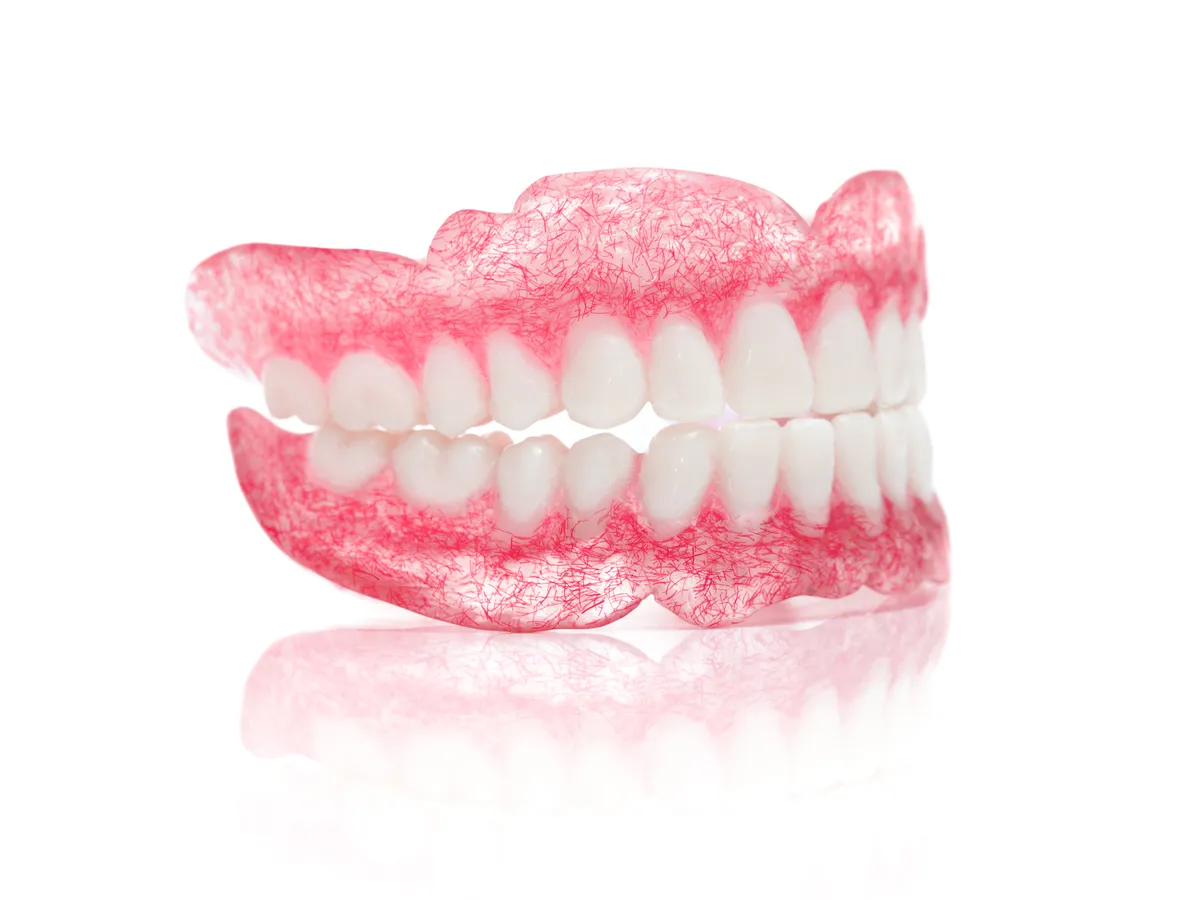
People wear dentures to replace lost or missing teeth so they can enjoy a healthy diet and smile with confidence. Dentures are made of either acrylic (plastic) or metal.
A full denture is one replacing all missing teeth.
A partial denture is one which replaces a few missing teeth.
Why should I wear dentures?
For centuries, some form of denture has been used to fill in the gaps left by missing teeth, although today’s dentures are much more advanced and easier to care for. Many patients elect dentures for tooth replacement if they are not candidates for dental implants or prefer a removable option.
Will dentures make me look different?
Replacing lost or missing teeth is very good for your health and appearance. A complete or full denture replaces your natural teeth and gives support to your cheeks and lips. Without this support, sagging facial muscles can make a person look older and they will find it harder to eat and speak properly.
Dentures can be made to closely match your natural teeth so that your appearance hardly changes. Modern dentures may even improve the look of your smile and help fill out the appearance of your face.
Will the dentures change the way I eat or speak?
It is about getting used to a new appliance, eating will take a little practice. Start with soft foods cut into small pieces. As you become more used to your denture, add other foods until you get back to your normal healthy diet.
Pronouncing certain words may take practice. Reading out loud and repeating difficult words will help and over time you will get used to speaking with your denture.
My upper denture fits fine, so why am I having problems with the lower plate?
The upper denture usually has much more suction to hold it in place. However there is much less gum support in the lower jaw, and the lower denture may feel more wobbly as it has to be balanced between your cheeks and your tongue.
After a little while you will learn the shape of your new denture and how to keep it in place, even when you open your mouth wide.
Must I do anything special to care for my mouth?
Even with full dentures you still need to take good care of your mouth. Every morning and evening, brush your gums, tongue and the roof of your mouth with a soft brush. This removes plaque and helps the blood circulation in your mouth. If you wear partial dentures, it is even more important that you brush your teeth thoroughly every day.
This will help stop tooth decay and gum disease that can lead to you losing more of your teeth.