

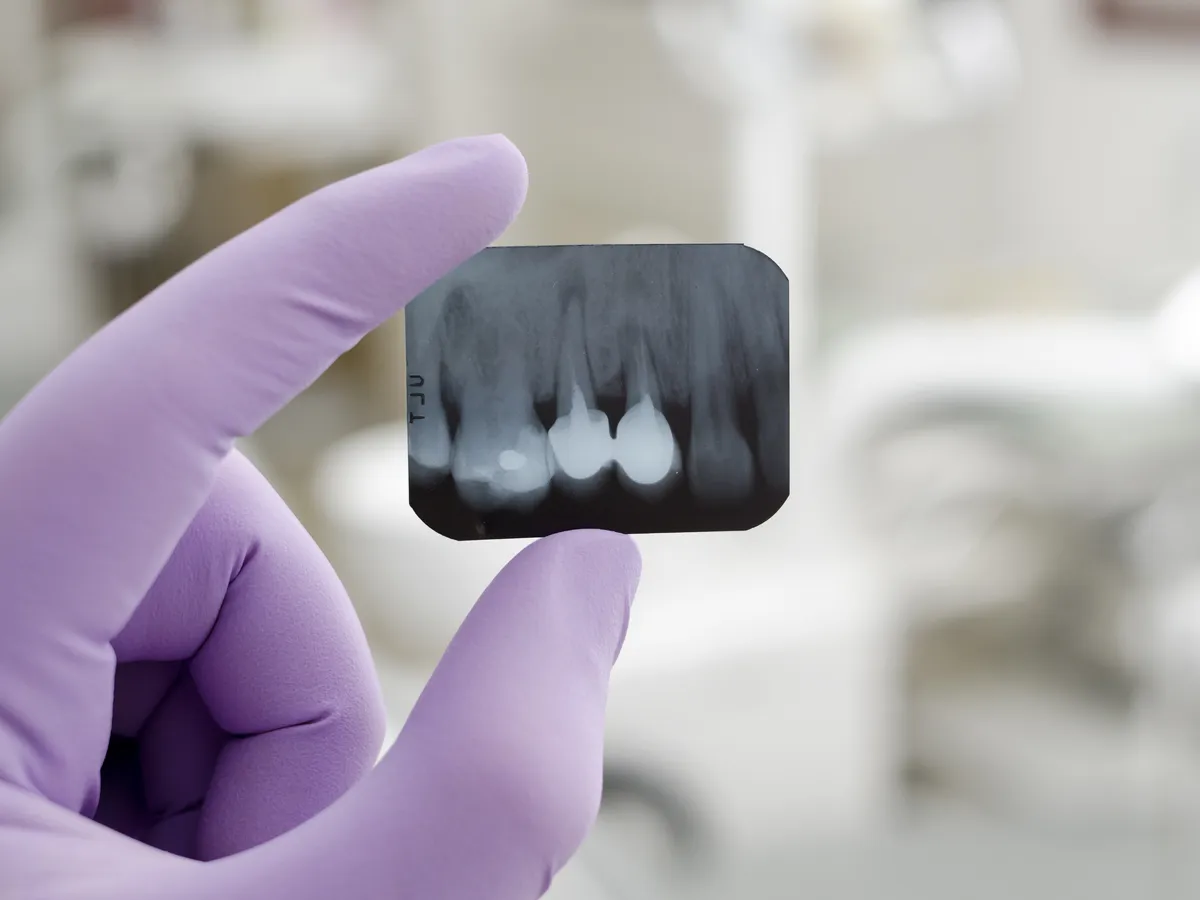
Who treats you, and how
- Who
- Dr Manisha Gupta, Principal Dentist, examines you first, plans your care and arranges for an endodontist (a dentist with a postgraduate degree, MDS, in root canal treatment) to carry out the treatment at the clinic.
- How
- An examination first, with X-rays only when needed, and your options explained before you decide.
- Local anaesthetic to numb the tooth.
- Most cases in a single visit; more than one if there is an abscess or swelling.
- You may need a crown afterwards for extra support and strength.
- Instruments cleaned, packed and sterilised in our own sterilisation room.
- Visits
- 95% of cases are completed in a single sitting. Cases with an abscess may require 2–3 visits.
- Time
- Front teeth approximately 45 minutes; molars approximately 90 minutes.
- Anaesthetic
- Local anaesthesia.
- Recovery
- The tooth may feel tender. This usually eases within a day or two and settles within a week.
Root canal treatment explained
Root canal treatment is needed when the blood supply or nerve of the tooth is infected through decay or injury.
Why is it needed?
If pulp becomes infected, the infection may spread through the root canal system of the tooth. This may eventually lead to an abscess. An abscess is an inflamed area in which pus collects and can cause swelling of the tissues around the tooth. The symptoms of an abscess can range from a dull ache to severe pain and the tooth may be tender when you bite. If root canal treatment is not carried out, the infection may spread and the tooth may need to be taken out.
Does it hurt?
You will usually have a local anaesthetic to numb the tooth, and sometimes a little more is needed during treatment. The tooth may feel tender afterwards; this usually eases within a day or two and settles within a week.
At Healthy Roots, we can do most cases in a single visit. Some teeth need more than one visit, for example if there is an abscess or swelling. Studies find no difference in healing between one visit and several.
What does it involve?
The aim of the treatment is to remove all infection from the root canal. The root is then cleaned and filled to prevent any further infection. Once the infection is cleared, the tooth is permanently filled.
Root canal treatment is a skilled procedure, carried out with care.
After root canal treatment the tooth may be more brittle. You may need a crown to give it extra support and strength.
What will my tooth look like after treatment?
In the past, a root filled tooth would often darken after treatment. However, with modern techniques this does not usually happen. If there is any discolouration, there are several treatments available to restore the natural appearance.
What if it happens again?
Root canal treatment can often save a tooth that would otherwise need to be taken out. In studies, about nine in ten root-filled teeth are still in place up to ten years later, and a crown afterwards helps the tooth last. However, if the infection comes back the treatment may have to be repeated.
What if I don’t have the treatment?
The alternative is to have the tooth out. Once the pulp is destroyed, it can’t heal. It is not wise to leave the infected tooth in the mouth, as it can lead to severe infection in the mouth. Although some people would prefer to have the tooth out, it is usually best to keep as many natural teeth as possible.
Sources: where the information on this page comes from (3 sources).