

Who treats you, and how
- Who
- Dr Manisha Gupta, Principal Dentist, examines you first, plans your care and, where needed, arranges for a prosthodontist (a dentist with a postgraduate degree, MDS, in restoring and replacing teeth) to carry out the work at the clinic.
- How
- An examination first, with X-rays only when needed, and your options explained before you decide.
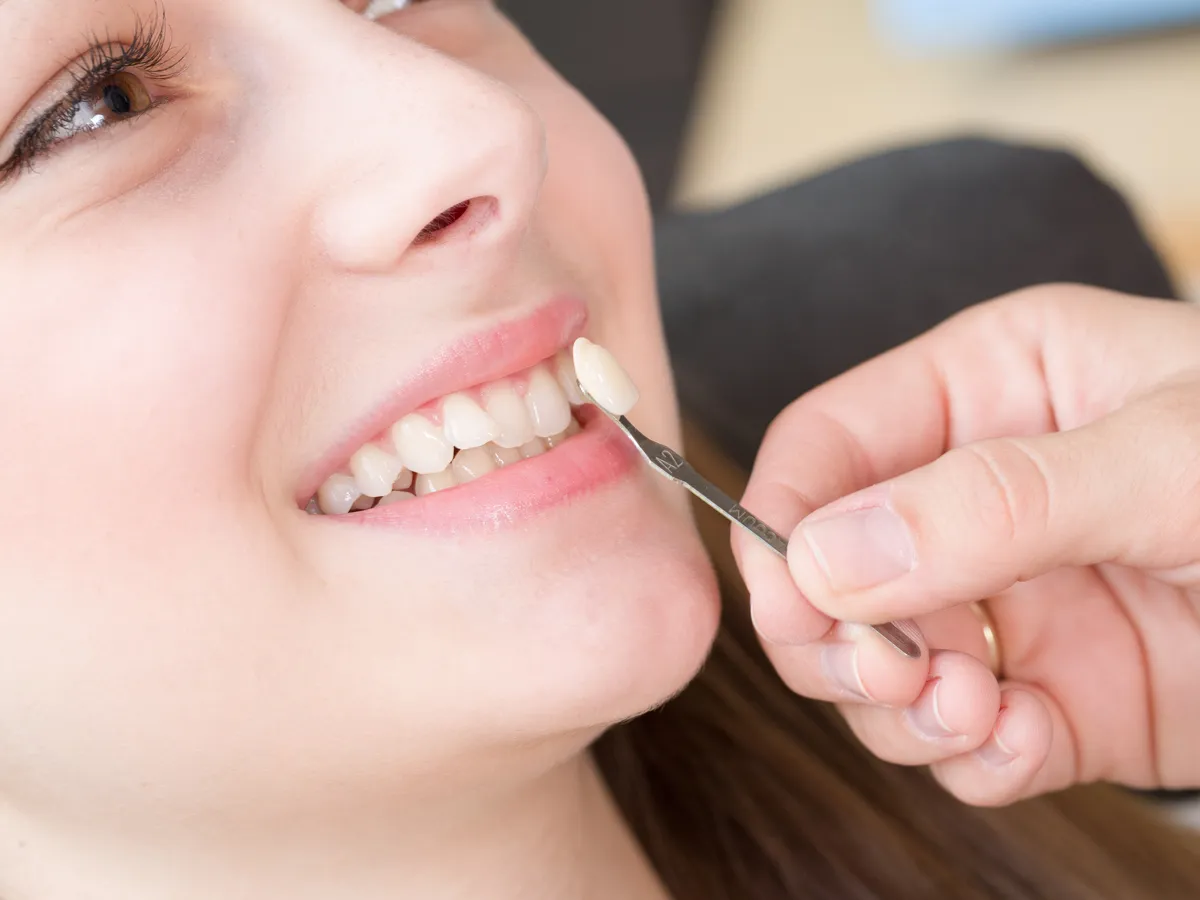
- Usually two visits: the first to prepare the tooth and match the shade, the second to fit the veneer.
- Instruments cleaned, packed and sterilised in our own sterilisation room.
- Visits
- Usually two.
- Time
- 45–60 minutes per visit.
- Anaesthetic
- Local anaesthesia.
- Recovery
- A temporary veneer may be worn between the two visits. The teeth may feel sensitive to hot and cold for a few days.
Veneers explained
A veneer is a thin layer of tooth-coloured material which is made to fit precisely over the visible surface of a front tooth to make it look better.
What are the advantages of a veneer?
Veneers can improve discoloured or misshapen front teeth, close small gaps, and repair chips and cracks. They can also cover teeth worn by acid from food and drink. They can look natural. Most porcelain veneers last many years. Because veneers are very thin and bonded in place, in some cases little or no shaping of the tooth is needed. Where enamel is removed, that change is permanent.
How long will it take?
Fitting a veneer usually takes two visits: the first to prepare the tooth and match the shade, the second to fit it.
What about alternatives?
A natural tooth-coloured filling material can be used for minor repairs to front teeth. This is excellent where the tooth supports a filling, but may not work well for broken tooth corners.
Crowns can be used for teeth which need to be strengthened - either because they have been broken, have been weakened by a very large filling, or have had root canal treatment.
Sources: where the information on this page comes from (2 sources).