

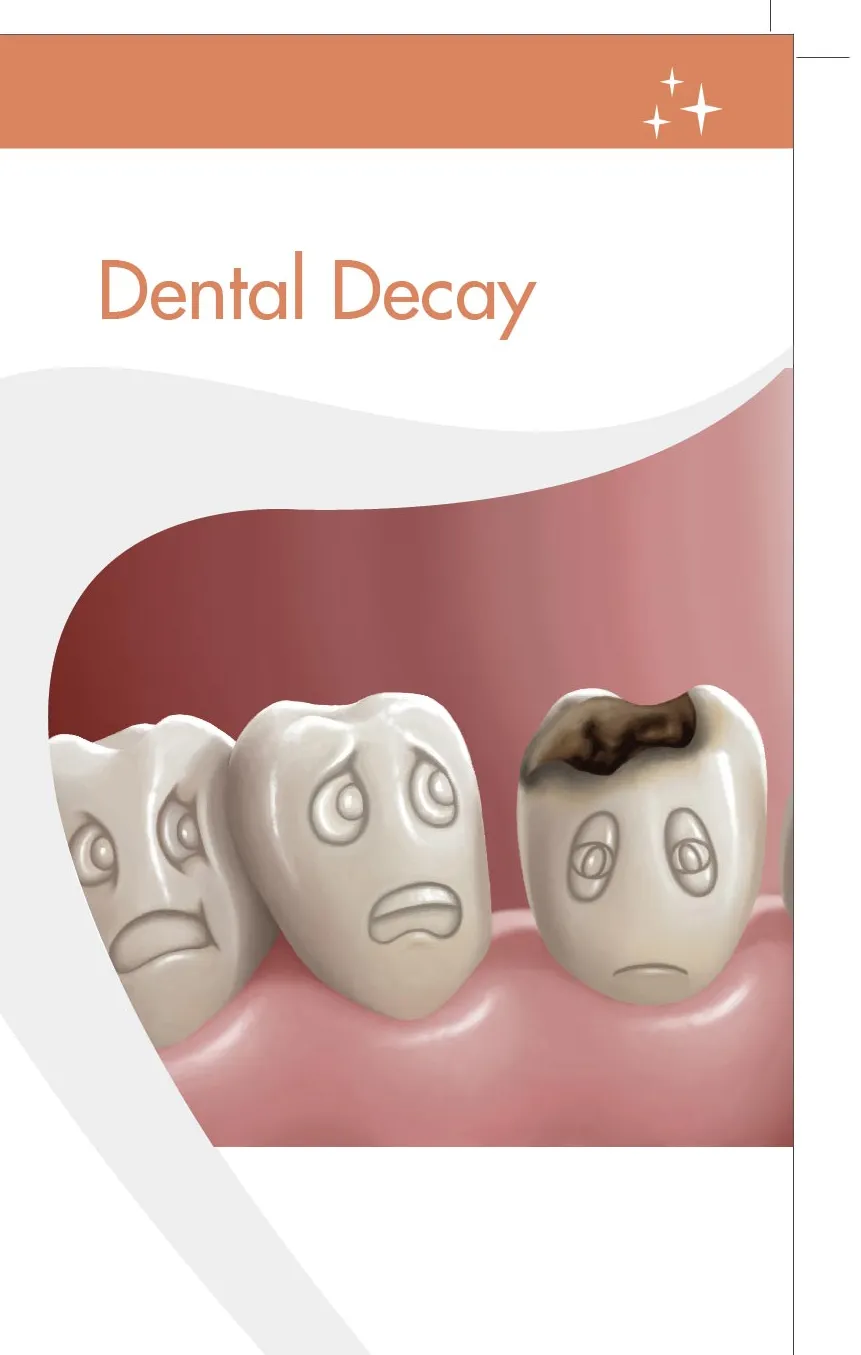
Dental decay is the softening of enamel and dentine of a tooth brought about by acid attack after you have eaten or drunk anything containing sugars. It can lead to a hole in the tooth, called a cavity. Decay damages your teeth and may lead to the tooth needing to be filled or even taken out.
What is enamel and dentine?
Enamel is the hard, protective outer coating of the tooth. It does not contain nerves or blood vessels and is not sensitive to pain. Dentine lies under the enamel, forming most of the tooth, and it can be very sensitive to pain.
What causes dental decay?
Dental decay is caused by plaque acids that gradually dissolve away the enamel and dentine of the tooth.
Plaque is a thin, sticky film that keeps forming constantly on your teeth. It contains many types of bacteria that feed on the sugars in the food you eat to produce acids.
The acid attacks can last for an hour after eating or drinking, before the natural salts in your saliva cause the enamel to ‘remineralise’ and harden again. It’s not just sugars but also the carbohydrate foods and drinks that react with plaque to form acids.
These are the ‘fermentable’ carbohydrates such as the ‘hidden sugars’ in processed food, natural sugars like those in fruit, and cooked starches.
Snacking between meals on sugary or acidic foods and drinks can increase the risk of decay, as the teeth come under constant attack and do not have time to recover.
What are the signs of dental decay?
Early stages of decay do not give rise to any symptoms. However regular dental examination can help to spot a cavity in its early stages. This is why it is important to visit us regularly as small cavities are much easier to treat than advanced decay.
What happens if I don’t get it treated early?
Toothache is a warning that something is wrong and you should visit us straight away. If you don’t do anything, this will usually make matters worse and you may lose a tooth that could otherwise have been saved. Your dentist at Healthy Roots will help you through the process and give you personalised attention.
What treatment will I need?
Your dentist at Healthy Roots will first assess the extent of decay. If the decay is not too serious it will be cleaned and your tooth will be restored with a filling. Sometimes the nerve in the tooth can be damaged. If so your dentist will need to carry out root canal treatment by removing the nerve and then restoring the tooth with a filling and a crown. In case the tooth is so badly decayed that it is unrestorable your dentist may have to take the tooth out.
Is there anything I can do to protect my teeth against decay?
The best way to protect your teeth from dental decay is to brush them regularly and thoroughly twice a day using a fluoride toothpaste. Use of interdental brushes or dental floss also helps to remove plaque and food from between your teeth and hard to reach areas where a regular brush can’t reach. Also limit the frequency of intake of sugary foods and drinks, restricting them to meal times.
How can my dentist at Healthy Roots help?
We will show you what areas you need to take most care of when cleaning. We will show you the correct brushing techniques and the use of interdental brushes and dental floss. We will look at your dietary habits and suggest ways to limit the acid attack on your teeth. Your dentist may advise you ‘fissure sealants’ to protect your teeth. These are plastic coatings that fill all the little crevices in the tooth surface, creating a flat surface that is easier to clean. Your dentist at Healthy Roots will discuss whether this is right for you.