

What is dental erosion?
Erosion is when the enamel of the tooth wears away by acid attack.
Enamel is the hard, protective coating of the tooth which protects the sensitive dentine underneath.
When the enamel is worn away the dentine underneath is exposed, which may lead to pain and sensitivity.
How do I know I have dental erosion?
Erosion usually shows up as hollows in the teeth and a general wearing away of the tooth surface and biting edges. This can expose the dentine underneath, which is a darker, yellower colour than the enamel. As the dentine is sensitive, your teeth can also be more sensitive to hot, cold, and acidic food and drinks.
What causes dental erosion?
Every time you eat or drink anything acidic, the enamel on your teeth becomes softer for a short while, and loses some of its mineral content. Your saliva will slowly neutralise this acidity in your mouth and restore it to its natural balance.
However, if this acid attack happens too often, your mouth does not have a chance to repair itself and tiny particles of enamel can be brushed away. Over time, you start to lose the surface of your teeth.
Also people suffering from hiatus hernia or oesophageal problems, or who drink too much alcohol, may also find they suffer from dental erosion due to vomiting.
Can my diet help prevent it?
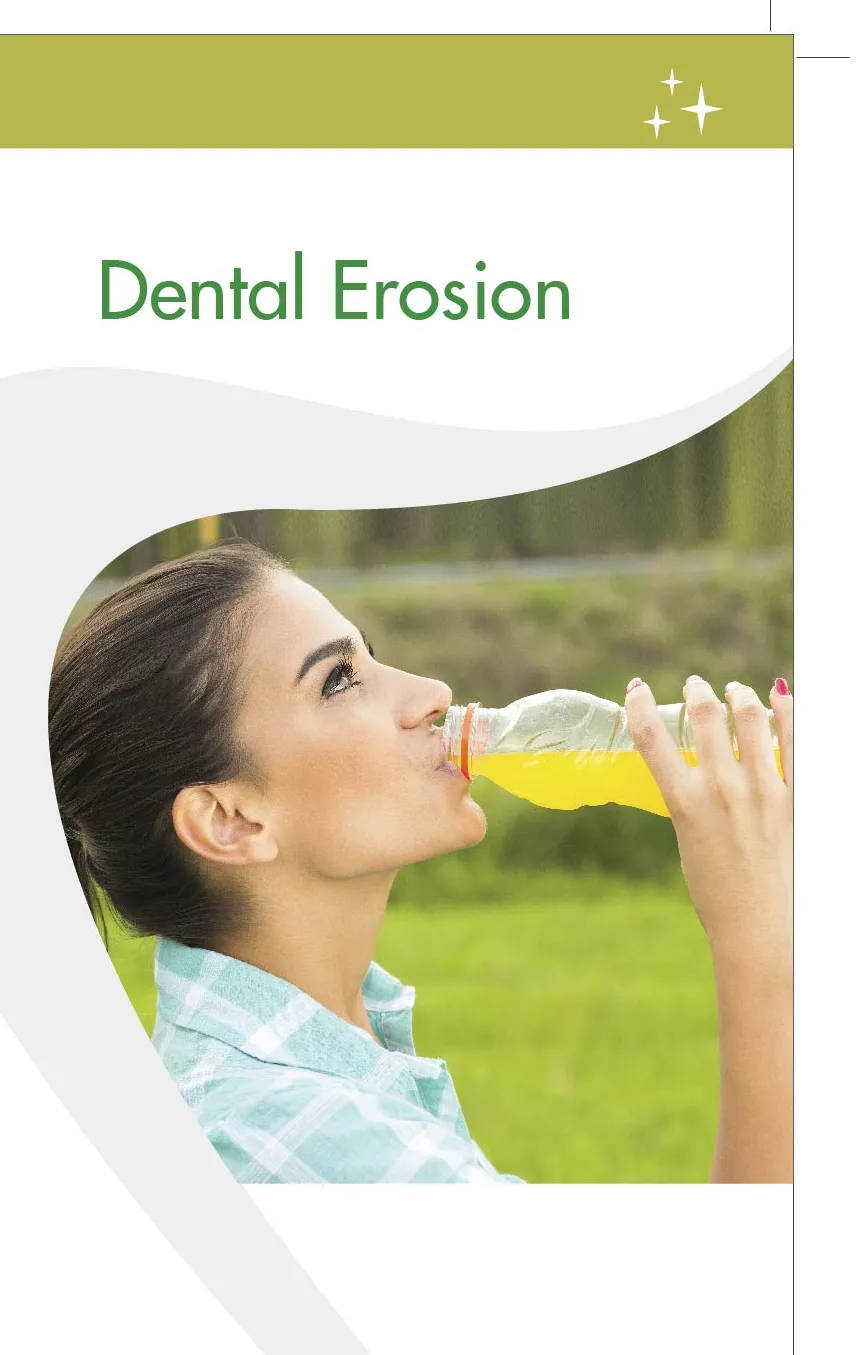
Acidic foods and drinks such as fizzy drinks including the diet brand, sodas and carbonated drinks can cause erosion. Plain, still water is the best drink for teeth. Milk is also good as it helps to neutralise the acids in your mouth.
What can I do to prevent dental erosion?
There are a number of things you can do:
-
Restrict the intake of acidic drinks to mealtimes so as to reduce the frequency of acid attack on your teeth.
-
Do not hold or swish the drink in your mouth. Use a straw to avoid long contact with your teeth.
-
Chewing a sugar free gum after eating can help as this will produce more saliva which will neutralise the acid in your mouth.
-
Do not brush immediately after eating, wait for at least an hour.
-
Brush your teeth last thing at night and at least once during the day.
Should I use any other special products?
Your dentist at Healthy Roots may suggest you use a fluoride containing mouthwash and have a fluoride varnish applied at least every six months.
How can it be treated?
Dental erosion does not always need treatment. With regular check-ups your dentist can help stop the erosion getting worse. It is important to protect the tooth and the dentine underneath to prevent sensitivity. In these cases simply bonding a filling onto the tooth will be enough to repair it. However, in more severe cases the dentist may need to fit a veneer.
(See our leaflet Veneers.)