


Gum disease explained
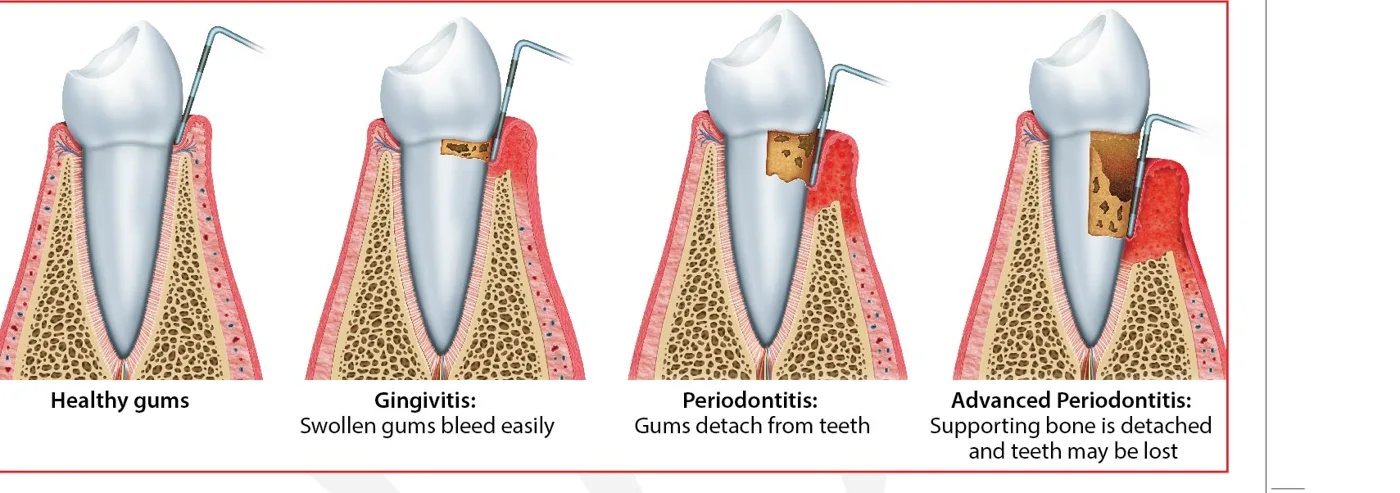
Gum disease is inflammation of the tissues that support the teeth and attach them to the jaw.
In the early stages the disease only involves soft gum tissue and is called gingivitis.
Later, disease may spread to the bone and is called periodontitis.
There are different types of periodontal disease and they all affect the tissues which support the teeth. As the disease progresses the bone which keeps the tooth in the jaw is lost. Left untreated, the tooth could eventually fall out.
Most people suffer from some form of gum disease and it is the major cause of tooth loss in adults. However gum disease develops very slowly in most people and it can usually be slowed down.
What is the cause of gum disease?
Gum disease begins with the deposition of plaque. Plaque is a film of bacteria which forms on the surface of the teeth every day.
Many of the bacteria in plaque are harmless, but there are some that are the main cause of gum disease. To prevent and treat gum disease, it is important to remove all plaque from the teeth every day. You can do this by brushing your teeth, and by cleaning in between them with inter-dental brushes and dental floss.
Some people are more prone to periodontal disease than others.
-
Smoking and drinking a lot of alcohol makes gum disease worse. Both are linked with oral cancer.
-
Diabetes and other diseases are prone to cause more gum disease.
-
Crooked teeth are more difficult to keep clean and can lead to isolated incidence of gum disease in the mouth.
-
Changes in your hormones during pregnancy or when using oral contraceptives can affect gum health.
How will smoking affect my gums and teeth?
People who smoke are more likely to have gum disease. When you smoke the number of harmful bacteria are likely to be more.
Smoking reduces blood flow in the gums and supporting tissues of the teeth and makes them more likely to become inflamed. Because of the restricted blood flow smokers may not get the warning symptoms of bleeding gums as much as non smokers.
How do I know if I have gum disease?
Your gums may bleed when you are eating, leaving a bad taste in your mouth. Your breath may become unpleasant and you might notice blood on your toothbrush while cleaning.
What should I do if I think I have gum disease?
The first thing to do is to visit us for a check-up of your teeth and gums. The dentist at Healthy Roots will measure the ‘cuff’ of gum around each tooth to see if there is any sign that periodontal disease has started. X-rays may also be needed to see the amount of bone that has been lost. This assessment is very important, so the correct treatment can be prescribed for you.
What happens if gum disease is not treated?
Gum disease usually develops painlessly. So most people do not notice the damage it is doing. However, the bacteria are sometimes more active and this is what makes your gums sore leading to gum abscesses and pus oozing from around the teeth. If the disease is left untreated for a long time, treatment can become more difficult. Over the years, the bone supporting the teeth can be lost, causing tooth loss.
What treatments are needed?
Based on the assessment of your gums and teeth your dentist may need to clean your teeth thoroughly.
Once your teeth are clean, your dentist may decide to carry out further cleaning of the roots of the teeth, to make sure that the last pockets of bacteria are removed. This is known as ‘root planing’.
In the intermediate state the use of antibiotics (in the form of a gel) will help to reduce the bacteria causing the gum disease.
Gum disease that has damaged the bone (periodontitis) cannot be reversed, but it can be controlled. As long as you keep up good cleaning at home, any further bone loss will be very slow and it may stop altogether.
The dentist at Healthy Roots will have a personalised session with you where they will show you how to remove plaque successfully yourself, cleaning all the surfaces of your teeth thoroughly and effectively. This may take a few sessions with the dentist.
Preventing gum disease
Teeth should be brushed twice a day for at least two minutes using a fluoride toothpaste. Choose a toothbrush with a small soft head, which allows you to reach all parts of the mouth easily and comfortably, and change it every three months.
Cleaning between your teeth with either a dental floss or special inter-dental brushes can make a real difference to maintaining healthy gums. Small inter-dental bottle brushes are designed specifically for cleaning the awkward areas between the teeth.
Take a look at the wide variety of brushes, inter-dental products and mouthwashes which are available. Your dentist at Healthy Roots will be happy to advise you which products would be most suitable for you.